Bareboat, skippered or crewed: the three words appear on every yacht charter listing, and they describe three completely different holidays. One makes you the captain, one puts a professional at the helm while you run the boat, and one gives you a private floating hotel with a full team on board.
This guide compares the three side by side: who does what on board, what licence you need, what each really costs, and which one fits your group.
TL;DR: Crewed vs skippered vs bareboat charter
-
Bareboat charter: You sail and manage the yacht yourself, including cooking, cleaning, and provisioning. It offers the lowest cost and most freedom but requires appropriate experience and, in many destinations, a sailing licence.
-
Skippered charter: A professional skipper handles navigation and sailing, while you remain responsible for meals, cleaning, provisioning, and the yacht’s security deposit. In the Mediterranean, a skipper typically costs €150–€250 per day, plus meals. You can add a hostess or cook for extra comfort.
-
Crewed charter: A professional captain and crew take care of sailing, meals, housekeeping, and onboard logistics. It’s the most expensive option, with running costs usually covered by an APA of around 25–35% of the charter fee, plus a customary 5–15% crew tip. Some Caribbean charters are all-inclusive.
-
Which should you choose? Bareboat suits experienced sailors on a budget; skippered charters suit beginners or those who want to learn; crewed charters are ideal for families, larger groups, and special occasions when everyone wants to relax.
-
Key distinction: A skipper sails the yacht you rent, while a captain manages the entire operation of a crewed yacht, including the crew, logistics, and guest experience.
| Bareboat | Skippered | Crewed | |
|---|---|---|---|
| Who sails the yacht | You | A professional skipper | A professional captain |
| Licence required | Yes (or a sailing resume in the Caribbean) | No | No |
| Who cooks and cleans | You | You (unless you add a hostess or cook) | The crew |
| Provisioning | You | You | The crew, based on your preference sheet |
| Responsible for the yacht | You (security deposit) | You (security deposit) | The captain and crew |
| Typical yachts | Monohulls and catamarans up to about 50 ft | Same yachts as bareboat | Sailing yachts, catamarans and motor yachts, from about 40 ft to superyachts |
| Budget | Lowest | Bareboat price + skipper’s fee | Highest, with APA and crew tip on top |
| Best for | Experienced, licensed sailors | Non-sailors on a budget, or sailors who want to learn | Families, groups, special occasions, anyone who wants to fully relax |
In one sentence: bareboat is a rental, skippered is a rental with a professional sailor, and crewed is a full-service holiday. The rest of this guide explains what that means in practice.
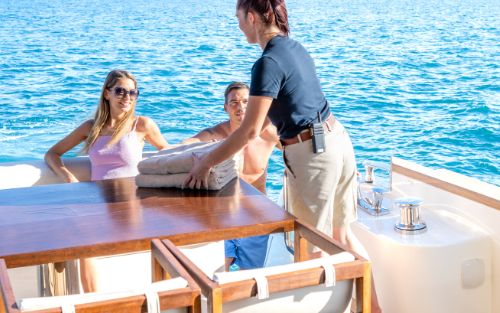
Bareboat charter: you are the skipper
A bareboat charter is a yacht rental without crew. The charter company hands you the boat, fully equipped and ready to sail, and for the week it’s yours: you navigate, anchor, moor, cook, and clean. It’s the most independent way to charter, and the most affordable.
Licence and experience requirements
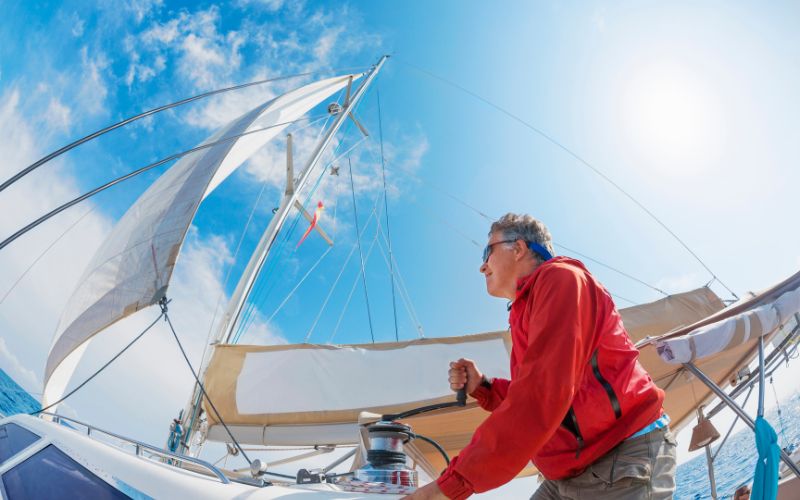
You can’t simply book a bareboat and set off. Requirements vary by country, but the general rules are:
- In most of the Mediterranean (Greece, Croatia, Italy…), the skipper needs a recognised sailing licence, such as an RYA Day Skipper, an IYT Bareboat certificate or an equivalent national licence, and usually a VHF radio certificate
- In the Caribbean, a licence is generally not compulsory: the charter company reviews your sailing resume and checks that your experience matches the size and type of yacht
- Everywhere, the base manager can test you at check-in. If they aren’t convinced, you may have to hire a skipper at your own expense
Experience matters as much as paperwork. If nobody in your group has handled a yacht of a similar size, anchored overnight, or berthed stern-to in a crowded harbour, a skippered charter is the safer choice.
What you pay on a bareboat charter
The base price covers the yacht and its standard equipment. On top of that, plan for fuel, marina fees, food and drinks, the final cleaning, and optional extras such as a dinghy outboard or paddleboards. You’ll also leave a security deposit, often several thousand euros, which many companies let you reduce with a non-refundable damage waiver.
For a sense of scale, a 44-foot sailing monohull in Martinique can start around $3,500 per week bareboat, and a 44-foot catamaran around $4,900, before extras. Prices rise sharply in peak season.
Pros and cons of a bareboat charter
- Pros: the lowest price, total freedom of itinerary, full privacy, and the satisfaction of sailing your own boat
- Cons: you need a licence and real experience, you’re responsible for the yacht and the deposit, and your holiday includes cooking, cleaning, and night-time anchor checks
More questions? See our Bareboat Charters FAQ
Skippered charter: a bareboat with a professional at the helm
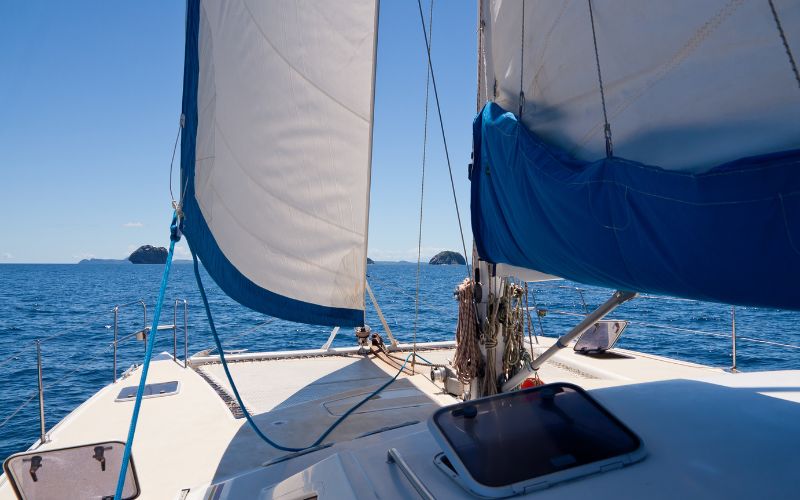
A skippered charter is a bareboat charter with a professional skipper added. The yacht is the same, the price structure is the same, but someone qualified handles the sailing, the navigation, and the manoeuvres. It’s the answer for groups with no licence who don’t want, or can’t afford, a fully crewed yacht.
What the skipper does, and what they don’t
The skipper is responsible for sailing the yacht safely: planning each day’s route with you, checking the weather, handling the sails, anchoring, and berthing. A good skipper is also a local guide who knows the quiet coves and the best tavernas. If you want to learn, most skippers are happy to teach you to helm, trim the sails, or drop the anchor.
What the skipper doesn’t do is run the boat for you. Cooking, provisioning, washing up, and cleaning remain your job, exactly as on a bareboat. A common misconception is that a skipper is a “mini crew”: they are a sailor, not a steward.
Adding a hostess or cook to a skippered charter
If you’d rather not cook on holiday, you can add a hostess or cook to a skippered charter. They take care of meals, provisioning, and keeping the interior tidy, which brings the experience much closer to a crewed charter at a lower cost. Rates for a host or hostess are typically around €120 to €200 per day, and a cook €150 to €300 per day, plus groceries.
Practical details to plan for
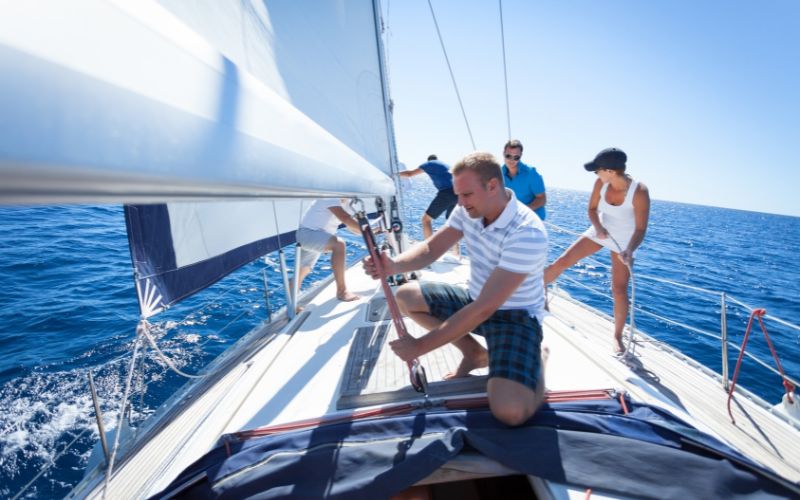
- A cabin for the skipper: the skipper needs a proper berth and access to a bathroom. On catamarans under about 45 feet, the forepeak berth can be very tight, so you may need to give up a guest cabin
- The skipper’s meals: guests usually cover the skipper’s food on board, and often ashore too
- Responsibility: legally, it’s still a bareboat rental, so the security deposit and damage liability stay with you, even though the skipper is at the helm
- A tip at the end of the week is customary if you were happy with the service
What a skippered charter costs
Add the skipper’s fee to the bareboat price: in the Mediterranean, typically €150 to €250 per day, or roughly €1,050 to €1,750 for a week, plus their meals. For a group of six on a catamaran, that often makes a skippered charter far cheaper than a crewed yacht of the same size.
Pros and cons of a skippered charter
- Pros: no licence needed, a local expert on board, the chance to learn, and a much lower price than a crewed charter
- Cons: you still cook, clean, and provision (unless you add a hostess), you lose a berth to the skipper on smaller yachts, and the deposit remains your responsibility
Read also: 5 Yachts For Charter You Can Book Under 70k€
Crewed charter: a private floating hotel
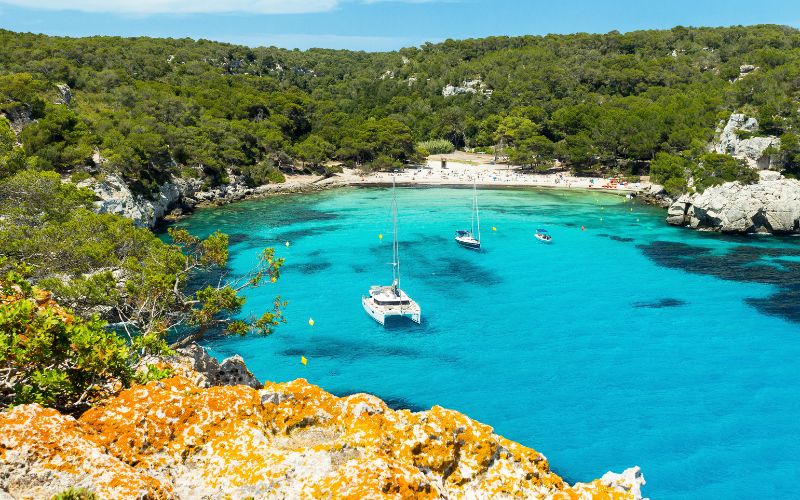
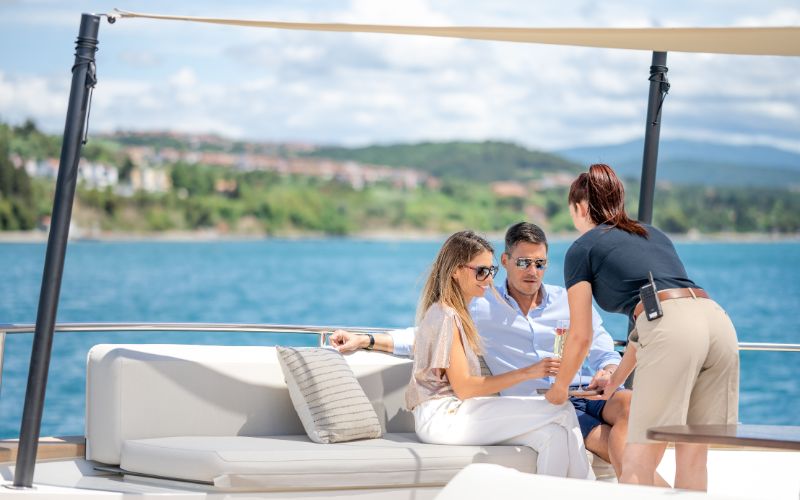
On a crewed charter, the yacht comes with a professional team that lives on board and runs everything. You don’t sail, cook, clean, or plan logistics: you choose the pace and the places, and the crew makes it happen. It’s the default option on larger yachts, and the most popular choice for first-time charterers who can afford it.
Who’s on board
On a crewed sailing yacht or catamaran, the minimum is usually a captain and a chef or hostess. Larger motor yachts and superyachts add stewards, deckhands, an engineer, and sometimes a dedicated chef and a second cook. Above about 50 feet, most charter yachts are only available with crew.
How a crewed charter is priced
The weekly charter fee covers the yacht and the crew’s salaries. Running costs, such as fuel, food, drinks, and marina fees, are paid through an APA (Advance Provisioning Allowance), usually 25 to 35% of the charter fee, with any unspent amount refunded. A crew tip of 5 to 15% of the charter fee is customary. In the Caribbean, many crewed catamarans are sold on an all-inclusive basis instead, where meals, drinks, and most running costs are included in the price. Our guide to luxury yacht charter costs details each item.
Pros and cons of a crewed charter
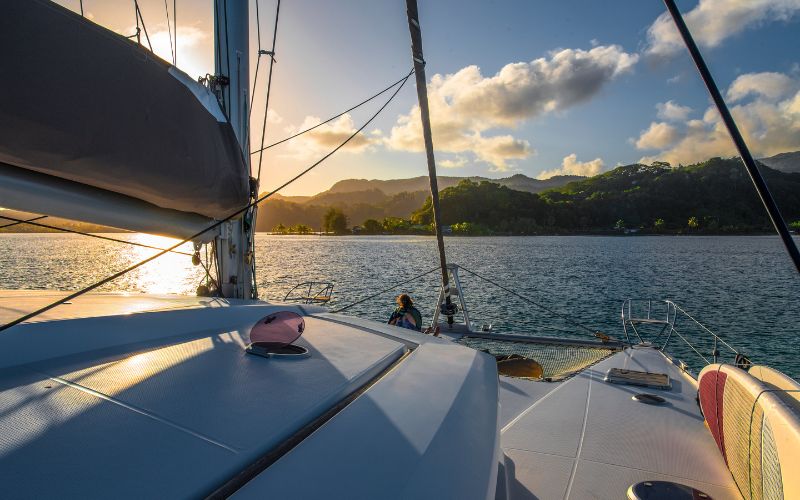
- Pros: a genuine holiday for everyone in the group, a chef cooking to your tastes, local knowledge of the best anchorages, and access to larger, more luxurious yachts
- Cons: the highest budget, less privacy, and an experience that depends heavily on the crew. Choosing a yacht through a broker who knows the crew personally is the best way to reduce that risk. The best crewed yachts also book up early for peak season
Browse our crewed catamarans, crewed sailing yachts and crewed motor yachts, or read our Luxury Crewed Yacht Charters FAQ.
Skipper vs captain: what’s the difference?
The two titles are often used interchangeably, but in chartering they describe different jobs.
- A skipper is a professional sailor hired to sail a bareboat yacht for the week. They often work as independent freelancers, usually alone, and their job is navigation and safety
- A captain is the head of a permanent crew on a crewed yacht. Beyond sailing, they manage the crew, the itinerary, the logistics, the APA, and the guest experience, and they have final authority on board
In short: a skipper sails the boat you rented, while a captain runs the whole operation you booked.
Bareboat, skippered or crewed: which one is right for you?
The right choice depends on three things: your sailing experience, your budget, and how much you want to do on board. Here are the most common situations.
You’re experienced sailors on a budget: bareboat
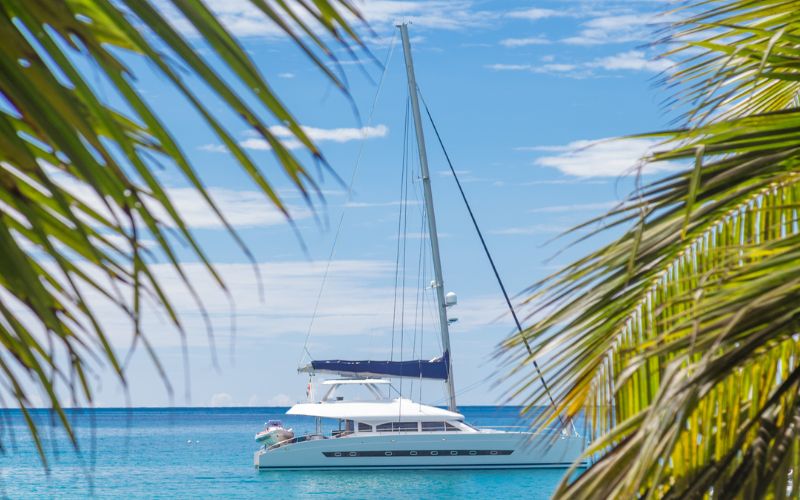
If at least one person in your group holds the right licence and has real experience on a similar yacht, bareboat gives you the most freedom for the lowest price. Pick a destination with short hops and sheltered anchorages for your first time, and consider a catamaran for extra space and stability.
Read also: Catamaran vs Monohull: Pros, Cons and How to Choose
You want to sail but have no licence: skippered
A skippered charter is the natural bridge between beginners and bareboat. You enjoy the sailing, learn from a professional, and keep costs close to a bareboat. Many sailors book a skippered week before taking their first licence.
You’re a family with young children: crewed, or skippered with a hostess
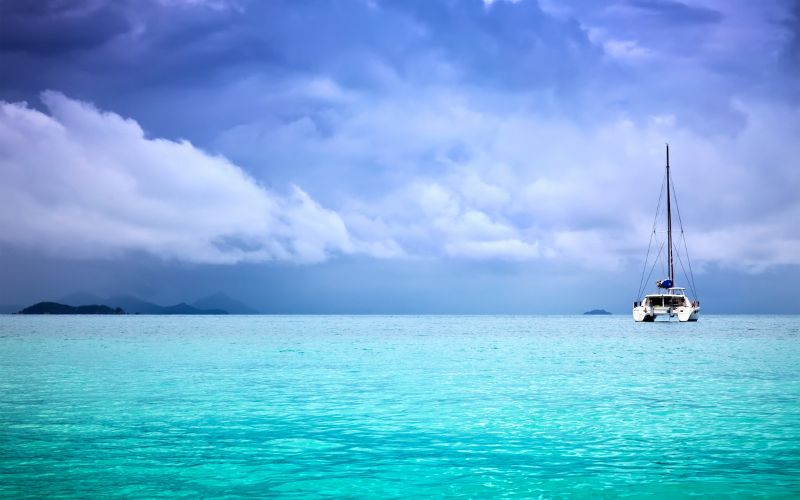
With children on board, someone needs to keep an eye on them at all times, which is hard when you’re also handling the boat and the galley. A crewed catamaran is the most relaxing option. If the budget is tight, a skippered catamaran with a hostess gets you most of the way there.
It’s a special occasion or a larger group: crewed
For a milestone birthday, a honeymoon, or a group of friends who want a true holiday, a crewed charter is worth the difference. And for yachts above about 50 feet, it’s usually the only option anyway.
Read also: How to Charter a Yacht: The Complete Beginner’s Guide
Choosing your charter type: the bottom line
Bareboat is for licensed, experienced sailors who want independence at the lowest cost. Skippered is for those who want to sail without the responsibility of navigation, while still running the boat themselves. Crewed is for anyone who wants a real holiday, with a captain, a chef, and a team taking care of everything.
Not sure which suits your group? Tell us your dates, destination, group size, and budget, and our team will suggest the right formula and the right yacht.
FAQ: Crewed, Skippered and Bareboat Charters
On a bareboat charter, you rent the yacht alone and sail it yourself, which requires a licence and experience. On a crewed charter, a professional captain and crew sail the yacht, cook, and look after you, so no experience is needed. Crewed charters cost significantly more but include full service.
A skippered charter is a bareboat charter with a professional skipper added to sail the yacht. You don’t need a licence, but you still handle cooking, cleaning, and provisioning, and you remain responsible for the security deposit.
A skipper only sails the yacht, while a crew runs everything on board, from navigation to meals and housekeeping. A skippered charter is much cheaper, but you do the hotel side of the holiday yourself, unless you add a hostess or cook.
Skippered. Beginners usually can’t meet bareboat licence requirements, and even when they can, a first week with a professional skipper is the best way to learn safely. Many sailors do a skippered charter before their first bareboat trip.
In the Mediterranean, a skipper typically costs around 150 to 250 euros per day, plus their meals. Rates vary by destination, season, and yacht size, so always check what is included before booking.
Only for a bareboat charter. In most Mediterranean countries, the skipper needs a recognised sailing licence and usually a VHF certificate, while Caribbean charter companies generally assess your sailing resume instead. No licence is needed on a skippered or crewed charter.
It depends on your experience and budget. Catamarans are stable and spacious, which makes bareboat sailing easier for experienced crews. For families or groups without a licence, a crewed or skippered catamaran is the better choice, and in the Caribbean many crewed catamarans are sold all-inclusive.