Yachting has never been a one-size-fits-all industry, but the last decade has pulled it in two directions at once. On one side, a handful of global brokerage houses have grown into full-scale institutions with offices on every continent and portfolios worth billions. On the other, a wave of founder-led boutique brokers has carved out serious ground by going deep instead of wide, often in a single region or a single category of yacht. Add peer-to-peer charter platforms into the mix and the modern client has more ways to book a yacht than at any point in the industry’s history. The question isn’t which model is “better.” It’s which one is built for what you’re actually trying to do.
What Is a “Mega Brokerage” in Yachting, and What Do They Actually Do?
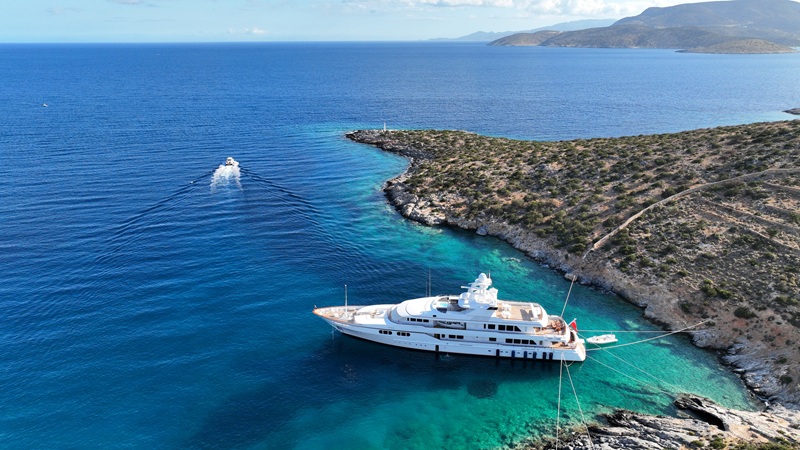
When people talk about the giants of yacht brokerage, they usually mean names like Fraser Yachts, Northrop & Johnson, Burgess, IYC, Camper & Nicholsons, and Edmiston. These are full-service houses that handle sales, charter, management, crew placement, and increasingly new-build consultation, all under one roof, with offices spread across the traditional yachting hubs: Monaco, Fort Lauderdale, Palma, Antibes, Hong Kong. Some of them have been in business for 40, 70, even close to 80 years, and that longevity shows up in the size of their in-house listings and the depth of their owner relationships. Read also: Best Yacht Charter Companies: an Overview
The scale advantage: what large brokerages do well
Scale is the whole game for a mega brokerage, and it genuinely pays off in certain situations. A firm managing a portfolio worth several billion dollars has relationships with owners, shipyards, and financiers that a two-person office simply cannot replicate. For a $30 million-plus superyacht sale, a new-build negotiation with a major shipyard, or a transaction that requires structuring across several jurisdictions, that network and institutional weight matter. These houses are also the ones with the marketing budgets to headline the big boat shows and the media placements in outlets like Boat International or Yachting World, which keeps their listings in front of the widest possible buyer pool.
The segment where mega brokerages are less focused
Where the model shows its limits is at the other end of the market, both in size and in category.
Sailing and motor catamarans. Multihulls have their own logic: hull design trade-offs, builder-specific quirks, crew-to-guest ratios that don’t map onto monohull norms, and a fast-growing but still relatively young charter fleet. Most brokers at a large house are generalists who handle everything from 25-metre motor yachts to 90-metre new builds, and catamarans tend to sit lower on the priority list simply because the average transaction size is smaller.
Small crewed sailboats and motoryachts. The 12 to 30-metre segment, whether monohull or catamaran, is rarely where a mega brokerage’s top talent or marketing spend is concentrated. It’s not unprofitable for them, it’s just not where the institutional focus sits. Read also: Sailing vs. Motor Yachts: Choosing Your First Charter
What Is a Boutique Yacht Broker and What It Changes Compared to Mega Brokers
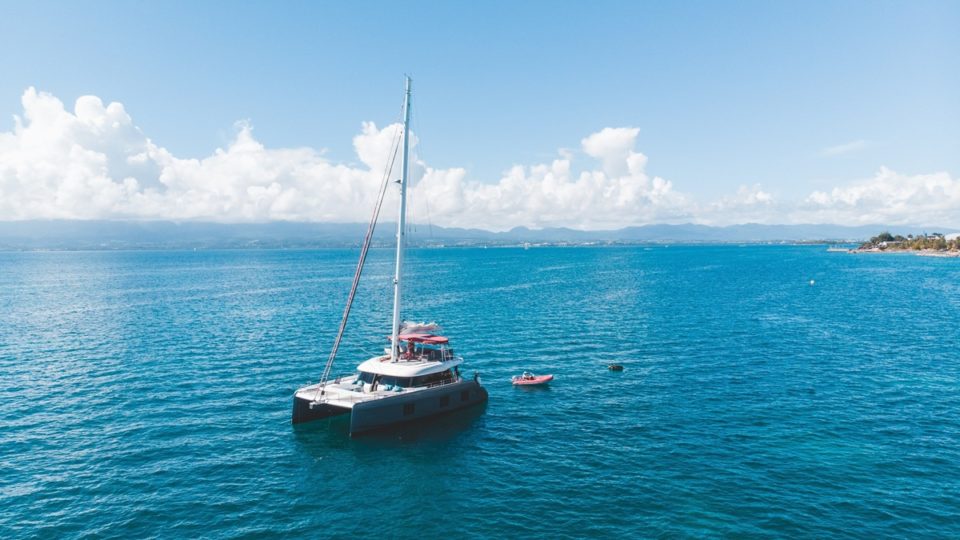
A boutique yacht broker is typically a smaller, often founder-led team that competes on depth rather than breadth. The key point that surprises a lot of first-time clients: boutique brokers usually have access to the same global listing pools as the majors, through networks like MYBA, YachtWorld, and CentralYachtAgent, so it isn’t a question of a smaller catalogue. What changes is focus. A boutique specialist tends to concentrate on one segment or one region, building genuine expertise in it rather than covering the entire market at a surface level, and without an in-house fleet pulling recommendations in one direction.
Independent vs. fleet-affiliated: the alignment question every client should ask
This is the one distinction that actually matters more than firm size, and it’s worth understanding clearly. Some brokerages also manage yachts themselves, which means they have a direct financial incentive to steer clients toward boats in their own managed fleet first, even when a better-fitting yacht sits with a competitor. That’s not necessarily bad faith, it’s simply how the incentive structure is built.
An independent boutique broker with no managed fleet has no such conflict. Their income comes from a successful, well-matched charter or sale, full stop, regardless of which yacht or which owner it involves. If you only ever ask one question when vetting a broker, this is the one to ask: do you manage any of the yachts you’re recommending to me?
What “boutique” does not mean
It’s worth being precise here, because “boutique” gets misread as a euphemism for smaller and less capable. It doesn’t mean local-only. It doesn’t mean a thin inventory. It doesn’t mean less safety or weaker contractual protection. A boutique broker that’s a MYBA member operates under exactly the same MYBA charter contracts and escrow standards as Fraser or Burgess. The paperwork, the stakeholder-held escrow account, the due diligence requirements, all of it is the same framework, regardless of how many offices the broker has.
Side-by-Side: Large Brokerage vs. Boutique Specialist

| Criteria | Large / Mega Brokerage (Fraser, N&J, IYC, Burgess…) | Boutique / Independent Specialist |
|---|---|---|
| Best for yacht size | 30m+ superyachts and megayachts | 15–30m, especially catamarans and sailing yachts |
| Fleet access | Very large in-house inventory, global | Same global databases + independent fleet access, no in-house bias |
| Client relationship | Account managed, broker may rotate | Usually one dedicated broker throughout |
| Specialist catamaran knowledge | Generalist, varies by individual broker | Deep, including builder nuances, layout differences, crew vetting |
| Fleet bias risk | Higher if the firm also manages yachts | Low to none if fully independent |
| Contract and escrow protection | MYBA standard (if MYBA member) | MYBA standard (if MYBA member) — same protection |
| Cost to client | No direct fee (commission from owner) | No direct fee (commission from owner) — same model |
| New build / superyacht structuring | Strong, especially 40m+ | Variable — some specialists offer this, most focus on the existing fleet |
When a Boutique Catamaran Specialist Is the Smarter Choice
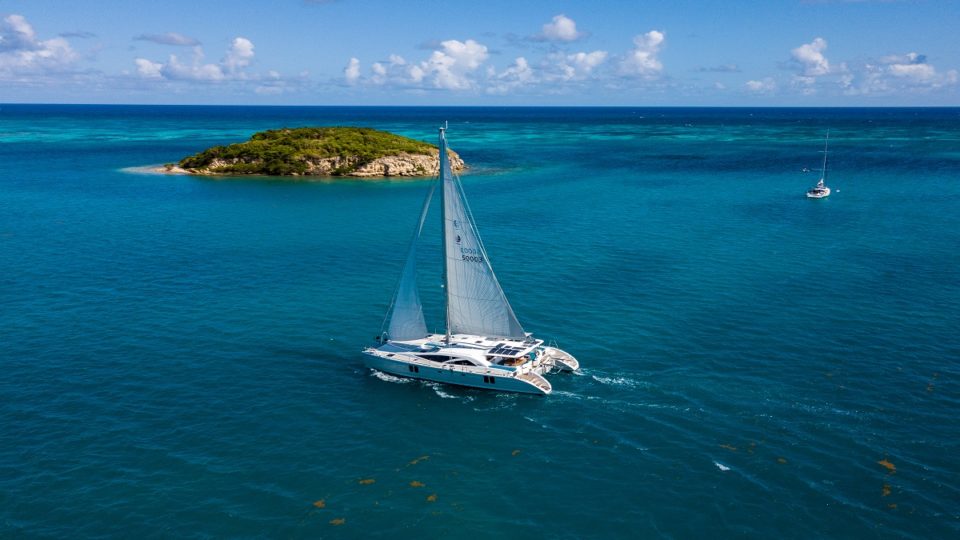
You’re chartering or buying a crewed sailing catamaran or motor catamaran
Catamarans are their own category, not a smaller version of a monohull, and treating them that way is where generalist advice tends to fall short. Builders differ enormously in philosophy: Lagoon leans into interior volume and livability and dominates the charter fleet as a result, Fountaine Pajot builds a lighter, more sail-performance-oriented boat with a smaller charter footprint, and at the top end, Sunreef and the power-cat lineups from Leopard, Aquila, and Sunreef Power each bring a different balance of luxury, range, and onboard systems. Add crew-to-guest ratios and the never-settled debate over forward versus aft owner-cabin layouts, and it becomes clear why a broker who lives in this segment day to day will simply know more than one who sells everything from 20-metre motor yachts to 90-metre new builds.
You want the full market, not a curated shortlist from one managed fleet
If a broker also manages a fleet, there’s a natural pull toward showing you boats from that fleet first. An independent boutique specialist has no fleet to protect, so the shortlist they build for you is drawn from the whole market rather than shaped around what they happen to manage.
You want one person who knows your file start to finish
At a large house, clients are often routed through account structures, junior brokers, or a rotating point of contact as deals move between sales and charter teams. Boutique brokers typically run a smaller book of clients with a lot more personal engagement per relationship. For a first-time charterer, or a buyer making a significant purchase, that difference in continuity and responsiveness is not a minor detail, it’s often the difference between a smooth process and a frustrating one.
You need expertise that spans charter and sales on the same vessel type
Many catamaran buyers plan to charter their yacht back through a management program during the weeks they’re not using it themselves. That requires a broker who genuinely understands both sides of the equation: charter revenue potential, seasonal positioning, and the relationships with management companies that make the numbers work. A specialist who works both charter and sales on the same category of boat is in a far better position to give realistic, joined-up advice than a team that’s siloed into separate sales and charter departments.
When a Mega Brokerage May Be the Right Call
None of this means boutique is always the answer. Large brokerages genuinely shine in a few specific situations: megayachts of 40 metres and above, ultra-high-value transactions in the $10 million-plus range, new-construction projects on large vessels, buyers who need a globally recognized name for corporate or institutional reasons, and complex multi-country tax structuring tied to large yacht ownership. In those cases, the scale and institutional weight of a major house is exactly what the transaction calls for.
How to Evaluate Any Broker Whether Boutique or Large
The four questions that reveal whether a broker truly fits you
Regardless of the size of the firm you’re talking to, these four questions cut through most of the noise:
- Have you personally been aboard the yachts you’re recommending to me?
- Do you or your company manage any of the yachts on the list you’re showing me?
- Are you a MYBA member, or do you use MYBA contracts and escrow?
- Can you share client reviews or references from similar charters?
Why verified client reviews matter more than brand size
A recognizable name is not the same thing as a track record with clients like you. Verified reviews from people who chartered or bought a similar type of yacht tell you far more about how a broker actually operates day to day than the size of the logo on their website. [Check verified reviews on Trustpilot.]
About WI Yachts: A Boutique Specialist Since 1998

WI Yachts has been operating as an independent, full-service yacht company since 1998, with headquarters on the Côte d’Azur and a team spread across Europe, the US, and Asia. The specialization is deliberate and narrow by design: crewed and bareboat sailing and motor catamarans and sailing yachts from 12 to 45 metres, covering charter, sales, and management under one roof. The reach spans the Mediterranean, the Caribbean, French Polynesia, the Indian Ocean, and beyond.
Crucially, WI Yachts is not a fleet manager pushing its own boats. It’s an independent broker with access to the full global catamaran market, built on more than 25 years of client relationships in a category it has focused on since the very beginning.
The Bottom Line: Bigger Isn’t Always Better, Match Matters
Neither model wins outright. A mega brokerage is the right call for a 50-metre new build or a nine-figure sale with complex international structuring. A boutique catamaran specialist is the right call when you want deep, unbiased expertise in a segment that generalist brokers only touch on the side, and a single dedicated point of contact from first enquiry to disembarkation. The size of the brokerage on the letterhead matters far less than whether its focus, its incentives, and its track record actually match what you’re trying to do. Read also: Yacht Buyer’s Guide: Top 10 Mistakes to Avoid for First-Time Buyers
FAQ: Boutique vs. Large Yacht Broker
Is a boutique yacht broker as safe as using Fraser or Northrop & Johnson? Yes, as long as the broker is a MYBA member or uses MYBA contracts and escrow. The contractual and financial protections are the same standard regardless of firm size; what differs is the depth of specialization, not the safety framework.
Do independent boutique brokers have access to the same yachts as the big firms? Largely, yes. Boutique brokers typically work through the same global listing networks, including MYBA, YachtWorld, and CentralYachtAgent, so the pool of available yachts is not meaningfully smaller. The difference is in curation and specialization, not access.
Does it cost more to use a boutique broker than a mega brokerage? No. Both models are typically paid on commission from the yacht owner, not a direct fee from the client, so the cost structure is the same either way.
What makes a crewed catamaran charter different from a standard yacht charter? Catamarans have a different hull configuration, different builder philosophies (comfort-focused versus performance-focused), different crew-to-guest ratios, and ongoing debates over layout choices like forward versus aft owner cabins. These are category-specific considerations that a generalist monohull broker may not weigh the same way a catamaran specialist would.
How do I know if my broker is recommending the best catamaran for me or the one they make the most money on? Ask directly whether they or their company manage any of the yachts on your shortlist. An independent broker with no managed fleet has no financial incentive to steer you toward one boat over another.
Is WI Yachts a MYBA member or recognized by industry bodies? WI Yachts operates as a full-service yacht company handling charter, sales, and management, and works within the industry-standard MYBA contract and escrow framework for its charter transactions.