

Chartering a yacht sounds like it belongs in a different world, one that requires connections, insider knowledge, and a private banker on speed dial.
In reality, the process is far more straightforward than most people expect, and the experience is genuinely accessible to first-timers who take the time to understand how it works. This guide covers everything: what a charter actually is, which type suits you, how much it really costs, and how to go from inquiry to setting sail.

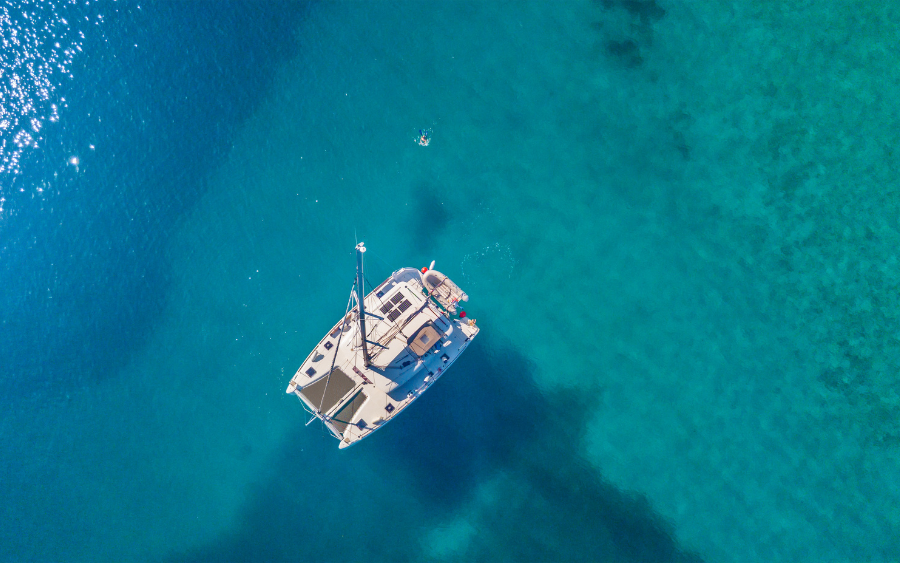

What exactly is a yacht charter, and how is it different from a cruise?
A yacht charter is the rental of a private yacht for an exclusive period, typically a week or more. The yacht, and everything on it, is yours and yours alone. There are no other guests, no fixed entertainment schedule, and no dining room you share with strangers. You set the itinerary, the pace, the destinations, and the rhythm of each day.
The comparison people reach for most often is a cruise ship, but the two experiences are almost nothing alike:
- On a cruise: fixed route, shared with hundreds or thousands of strangers, fixed schedules and dining rooms
- On a charter: you go where you want, when you want, at a pace entirely dictated by your group
Want to spend three days anchored in a secluded bay and never set foot in a marina? You can. Want to arrive in a glamorous port for dinner every evening? You can do that too. The yacht is, in the most literal sense, a floating hotel that moves according to your wishes.
Crewed charter vs. bareboat vs. skippered: the three main types explained
Before anything else, you need to understand the three types of charter, because they represent three fundamentally different experiences, and which one is right for you shapes everything that follows.
Crewed charter
The yacht comes with a full professional crew: at minimum a captain, and on larger yachts a chef, a steward or stewardess, and additional deck crew. You do not need to know anything about sailing. You board, you relax, and the crew handles everything from navigation to meal preparation to keeping the yacht spotless. This is the right choice for the vast majority of first-time charterers.
Bareboat charter
You rent the yacht alone, with no crew, and you are the skipper. This requires:
- A valid sailing licence (RYA Day Skipper or equivalent, as a minimum)
- Demonstrated sea miles and experience
- Confidence to handle the vessel and its systems independently
It is not a beginner option.
Skippered charter
You rent the yacht on a bareboat basis but hire a professional captain to handle the sailing. You can participate as much or as little as you like. This works well for people who want to learn while sailing, or who are experienced sailors but want to relax rather than work on holiday.
For a first charter: go crewed. The experience is richer, the logistics are simpler, and you will wonder why you ever considered anything else.
Quick-reference: which type of charter is right for you?
| Charter Type | Sailing Experience Needed | What’s Included | Best For |
|---|---|---|---|
| Crewed | None | Yacht + captain + chef + crew | First-timers, luxury seekers, families |
| Skippered | None (skipper handles sailing) | Yacht + professional captain | Those who want to participate without full responsibility |
| Bareboat | Required (sailing licence) | Yacht only | Experienced sailors, independent travellers |
How much does it actually cost to charter a yacht, all in?
Most articles on yacht chartering either skip this question or give numbers so vague they’re useless. Let’s be direct, because understanding the cost structure before you start looking at yachts will save you a lot of confusion and a few unpleasant surprises.
We explain the yacht charter cost structures in depth here if you want more details than the summary below.
Base charter fee: price ranges by yacht type
Base charter fees (the headline price you’ll see quoted) vary enormously depending on size, age, and type of vessel:
- Entry-level crewed sailing yacht (4-6 guests): $5,000 to $10,000 per week
- Mid-range motor yacht (more space and amenities): $15,000 to $40,000 per week
- Luxury superyacht: from $50,000 per week and well into six figures
These are base fees only. Your actual total will be higher, because the charter fee is not the full picture.
The base charter fee: what it covers and what it doesn’t
The charter fee covers the yacht itself and, for crewed charters, the crew’s salaries. It does not cover:
- Fuel
- Food and drinks
- Marina and docking fees
- Crew gratuity
These additional costs are real and significant. On a typical crewed charter, they add 30 to 50 percent on top of the base fee. This isn’t a hidden catch. It’s simply how the industry works, and once you understand the structure it becomes straightforward to budget for. The mechanism that covers these running costs is called the APA.
What is APA and how does it work?
APA stands for Advance Provisioning Allowance. It’s a prepaid budget, held by the captain, that covers all running costs during your charter. Here is how it works in practice:
- You pay the APA before boarding, on top of the charter fee
- The captain manages it during the trip, covering fuel, food and drinks, marina fees, and crew expenses ashore
- At the end of the charter, you receive a full itemised reconciliation
- Any unspent amount is returned to you
- If your group spends more than the APA (unusual, but possible on a fuel-heavy motor yacht), you settle the difference on departure
Typical APA is 25 to 35 percent of the base charter fee. On a $20,000 per week charter, that means budgeting an additional $5,000 to $7,000 for running costs. This money isn’t a fee. It’s your provisioning budget, and whatever you don’t spend comes back.
How much to tip the crew, and how to handle it
Crew gratuity is the one cost that catches most first-timers completely off guard, mostly because no one talks about it clearly before they board.
The basics of tipping on a charter
- When: at the end of the charter, on the day of departure
- How: in cash, given directly to the captain for distribution among the crew
- How much: 5 to 15 percent of the base charter fee, with 10 percent being the standard benchmark for a charter where the crew performed well
- Example: on a $15,000 per week charter, a $1,000 to $1,500 tip is typical
Gratuity is customary rather than contractually required, but it is very much expected. Factor it into your total budget from the start rather than discovering it on departure day.
What’s included vs. what’s extra: a quick breakdown
| Usually Included in Charter Fee | Usually Covered by APA | Paid Separately |
|---|---|---|
| The yacht | Fuel | Crew gratuity (5-15%) |
| Crew salaries (crewed charters) | Food and drinks | VAT (varies by country) |
| Basic water toys (varies by yacht) | Marina and docking fees | Cancellation insurance (strongly recommended) |
| Linens and towels | Crew expenses ashore | Premium water toys or specialist equipment |
How to choose the right yacht for your first charter
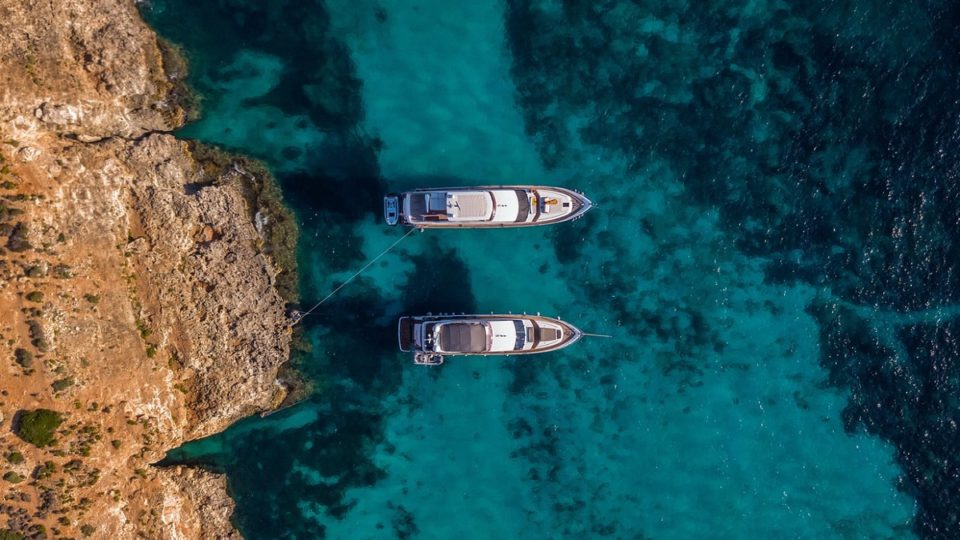
Once you have a clear sense of your budget, choosing the right yacht comes down to three variables: size, hull type, and what you want to do on the water. Get these three things right and the rest falls into place with the help of a good broker.
Size: how big a yacht do you actually need?
The general rule of thumb is one cabin per couple, as an absolute minimum for comfort. Here’s a rough guide by group size:
- 2 to 4 guests: a well-designed 40 to 45-foot yacht
- 6 to 8 guests: typically 50 to 60 feet
- 8 to 12 guests: 70 feet and above, with crew quarters factored in
One practical limit worth knowing: most charter yachts are licensed for a maximum of 12 guests while cruising, regardless of how many berths the boat physically has. A yacht with ten cabins might sleep 20 people in port, but it can only legally cruise with 12 guests aboard. Chartering a commercially certified vessel for larger groups is possible but significantly narrows your options and increases the cost. If your group is larger than 12, flag this with your broker from the outset.
Monohull vs. catamaran: which is better for beginners?

This question comes up in almost every first-charter conversation. Here’s how the two compare:
Monohull
- Classic single-hulled sailing yacht: elegant and traditional
- Generally slightly less expensive to dock
- Heels (tilts) in a breeze, which some find exhilarating and others uncomfortable
- More of an authentic sailing sensation
Catamaran
- Two hulls mean it stays far more level in most conditions
- More deck space, more living space, and larger cabins
- Better choice for families with children or anyone prone to seasickness
- Typically more expensive to dock in marinas
There is no universally right answer. Tell your broker both options are open and let them guide you based on your group’s profile.
What activities and water toys do you want on board?
Yachts are equipped very differently when it comes to water toys and recreational equipment. If watersports are a priority for your group, this needs to be a selection criterion from the start. Common options include:
- Paddleboards and kayaks
- Snorkelling and scuba gear
- Inflatable slides and tenders
- Jet skis and e-foils (on larger, more premium vessels)
Before approaching a broker, make a shortlist of the activities that matter most. The broker can filter available yachts accordingly, and you won’t end up on a beautiful boat that doesn’t match what your group actually wants to do.
Where to charter your yachts: choosing a destination that works for beginners
The world offers no shortage of extraordinary charter destinations. For a first charter, narrowing it down to somewhere with forgiving sailing conditions, excellent infrastructure, and genuinely beautiful scenery makes the experience much smoother. For most first-timers, two regions stand out.
The Mediterranean (summer)
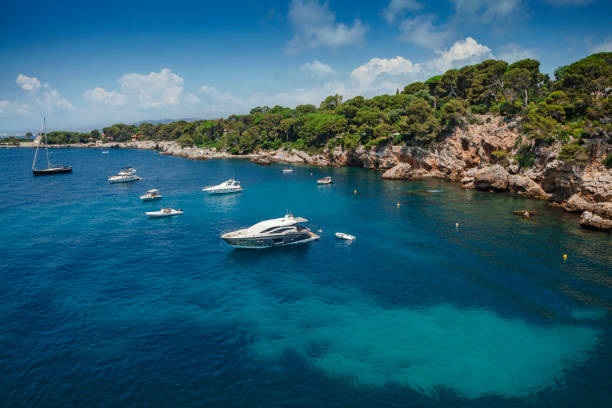
Warm, reliable winds, spectacular coastlines, and outstanding food and culture within easy reach. Top destinations for first-timers:
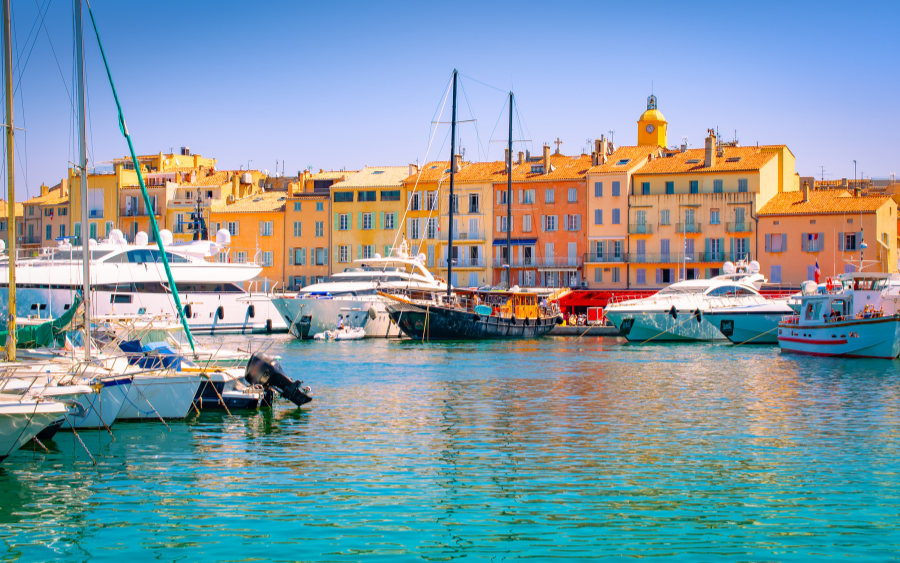
- French Riviera: glamorous ports, excellent infrastructure, iconic coastline
- Greek islands: incredible variety, crystal-clear water, well-established charter base
- Croatia: stunning Adriatic coastline, less crowded than France or Greece in shoulder season
The Caribbean (winter)
Reliably good trade winds, flat-water sailing between islands, and an atmosphere perfectly suited to this kind of holiday. Top destinations for first-timers:
- British Virgin Islands: considered the world’s best learning ground for first-time charterers. Short passages, well-protected anchorages, remarkable water
- St Barths and St Martin: more upscale, excellent for those seeking glamour alongside sailing
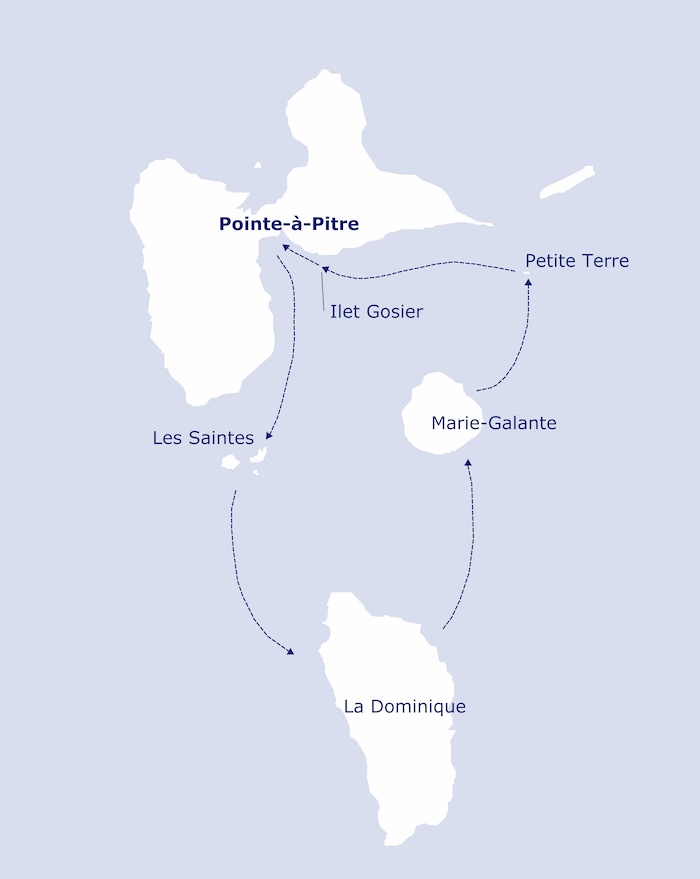
- Guadeloupe and Martinique: beautiful, less crowded, great for adventurous itineraries
When to go: high season vs. shoulder season
Mediterranean seasons
- Full season: April to October
- Peak: July and August (highest prices, most crowded anchorages)
- Best value: May, June, and September (excellent weather, 20-30% lower rates, far fewer boats)
Caribbean seasons
- Full season: November to April
- Peak: Christmas, New Year, and February half-term (book 10-14 months ahead)
- Best value: April (still great conditions, marinas quieter, crew more relaxed)
Experienced charterers frequently prefer shoulder season precisely because the experience is more relaxed. If your dates are flexible, it is genuinely worth considering.
How far in advance should you book?
- Mediterranean or Caribbean peak season: 6 to 12 months ahead is the practical minimum
- Christmas and New Year in the Caribbean: 10 to 14 months ahead, as the best vessels are gone early
- French Polynesia or Fiji: 18 to 24 months ahead, as the number of quality yachts in these regions is limited and they are chartered continuously by returning clients
Last-minute charters do exist, and occasionally an attractive deal surfaces, but the selection is thin and the best yachts are rarely among them. Planning ahead is not a formality. It directly determines the quality of what’s available to you.
How to charter a yacht: the step-by-step process from first inquiry to setting sail

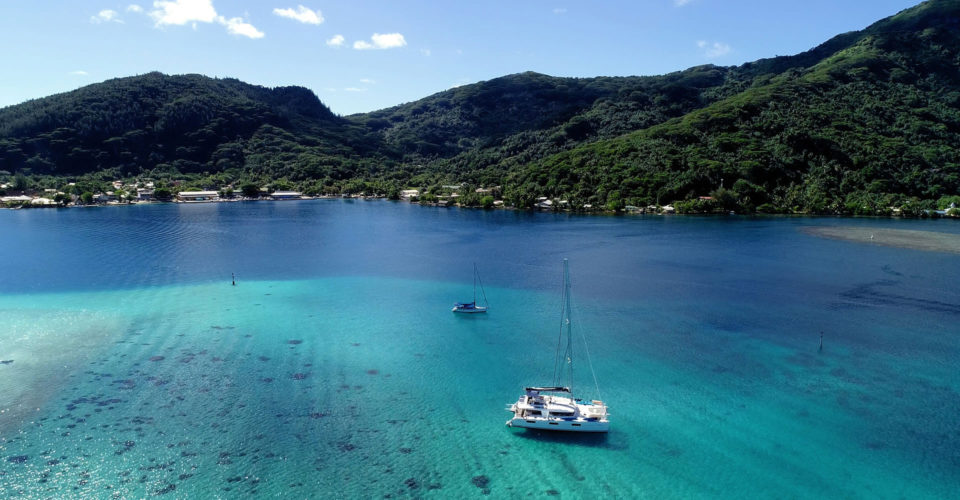
The process of booking a yacht charter is more structured than most people expect, and considerably less intimidating once you see it laid out sequentially. Here is exactly how it works.
Step 1: Define your group, budget, and non-negotiables
Before you contact a broker or look at a single yacht listing, get clear on the following:
- How many people are in your group
- Your total all-in budget (charter fee + APA + gratuity, not just the base fee)
- Preferred destination and dates
- Must-have activities, water toys, or onboard features
The more specific you are at this stage, the more useful your broker can be. A vague brief produces a vague proposal. A specific brief produces exactly the right shortlist.
Step 2: Find a reputable charter broker

A yacht charter broker is your guide through the entire process. For a first crewed charter, working with a good one is not optional. It is the single most important decision you make. Here’s what a broker actually does for you:
- Visits and inspects the yachts they recommend
- Meets captains and crew in person
- Draws on a track record of client feedback
- Negotiates the best rate on your behalf
- Guides you through contracts, payments, and logistics
Their commission is paid by the yacht owner, which means their service costs you nothing directly. Look for brokers who are members of MYBA (the Worldwide Yachting Association) or EYBA as a baseline quality indicator. Avoid booking your first crewed charter through a generic online aggregator, as the personal knowledge a good broker brings is genuinely irreplaceable.
Read also: How To Choose The Right Yacht Broker?
Step 3: Receive proposals and choose your yacht
Based on your brief, the broker will send a shortlist of proposals, typically two to five yachts. When reviewing them, pay attention to:
- Yacht specifications and layout
- Photos (interior and exterior)
- Crew profiles and verified reviews
- Charter history and repeat client rate
Ask your broker to explain the differences between proposals and to give you a personal recommendation. A good broker will have an opinion, and it’s worth hearing. It’s also entirely reasonable to ask to speak with the captain before committing.
Step 4: Review and sign the charter agreement
The charter agreement is the legal contract between you and the yacht owner. Most reputable charters use MYBA standard contracts, which are an industry benchmark and provide meaningful protection for both parties. Key things to check:
- Dates and embarkation/disembarkation ports
- Payment schedule and deposit terms
- Cancellation policy
- What is and isn’t included
Read it properly before signing. If anything is unclear, ask your broker. This is exactly what they’re there for.
Step 5: Complete your preference sheet
Once the contract is signed and the deposit paid, the broker will send a preference sheet. This document is arguably the most important thing you do before boarding. It covers:
- Dietary requirements and allergies
- Preferred food and drink (including specific wines, spirits, and soft drinks)
- Meal times and dining preferences
- Activity preferences and water toy requests
- Special occasions (birthdays, anniversaries) happening during the charter
- Any medical considerations the captain should be aware of
Fill it in thoroughly. “We like sushi” and “one guest is celiac and one is allergic to shellfish” are both equally useful. Vague answers produce a vague onboard experience. Specific answers produce something that feels genuinely tailored.
Step 6: Pay the APA and prepare for departure
APA is typically paid one to two weeks before departure. At the same time, start thinking practically about packing.
What to bring
- Soft-sided duffel bags only (hard suitcases have nowhere to go in a yacht cabin)
- High-SPF sunscreen
- Motion sickness tablets, just in case
- A good hat and lightweight layers
- Waterproof phone case
What to leave behind
- Hard suitcases or rigid luggage
- Heels (they damage teak decks and are useless on a boat)
- Excessive clothing (storage space is limited)
Most yachts provide towels, linens, and basic snorkelling gear, so these don’t need to come with you.
Step 7: Board, relax, and let the crew do the rest
On arrival, the captain will walk you through a safety briefing covering life jackets, emergency procedures, and the yacht’s key systems. After that, your responsibilities as a guest are essentially zero. The crew handles navigation, provisioning, cleaning, and everything in between. Your job is to enjoy it.
At the end of the charter:
- Tip the crew before you disembark
- Ask your broker for a detailed APA reconciliation to see how the provisioning budget was spent
- Give your broker honest feedback on the yacht and crew, as it helps them make better recommendations for you next time
Life on board: what to expect during your yacht charter
First-timers often have an unspoken question that sits beneath all the practical ones: “What is daily life actually like on a charter?” The honest answer is that it’s considerably more relaxed than people anticipate.
A typical day on a crewed charter
- Morning: breakfast on deck at anchor, often in a bay you arrived at the previous evening
- Mid-morning: swimming, paddleboarding, snorkelling, or exploring ashore by dinghy
- Lunch: on board at anchor, or at a local restaurant ashore
- Afternoon: a leisurely passage to the next anchorage, or another lazy swim stop
- Sundowners: on the bow or foredeck, watching the light change
- Dinner: on the yacht or at a restaurant ashore
The pace is yours to set, and the crew adjusts to it. On some days you’ll cover a lot of ground; on others you’ll barely leave the same bay. Both are equally valid.
One concern people sometimes have: “Will it feel strange having the crew around all the time?” The answer, almost universally, is no. Professional yacht crews are trained to be present when needed and discreet when not. You will quickly stop noticing them in the background and start noticing only what they make possible.
The unwritten rules: yacht etiquette for first-timers
There are a handful of conventions worth knowing before you board. None are onerous: knowing them in advance simply means you won’t have to figure them out on the day.
- Shoes off before stepping on deck, always, on every yacht, without exception
- Crew quarters are private and off-limits at all times
- Smoking policies vary by yacht; confirm with your broker before booking if this matters
- Pets are sometimes permitted but must be declared in advance and approved by the owner
- The captain has absolute authority over safety decisions. If conditions change and the itinerary needs to alter, that is not a discussion. It’s what keeps you safe.
Read also: The guide to onboard Do’s and Don’ts
Food, drink, and meals on board of a yacht charter: what to expect
On a crewed charter with a chef, meals are prepared around your preference sheet. This is one of the genuine pleasures of the experience: a professional chef cooking specifically for your group, using fresh local produce, adapting to your tastes and dietary needs day by day.
Typical meal rhythm
- Breakfast: relaxed, on deck, usually freshly prepared
- Lunch: often lighter, especially on passage days
- Dinner: as formal or informal as your group prefers, on board or ashore
One practical tip: book at least two or three dinners ashore during the week. The local restaurants in popular charter destinations are often excellent, and eating ashore gives the crew time to reset the yacht. Your charter does not lose anything by going ashore for dinner. It gains a change of scene and usually a memorable meal.
The most common mistakes first-time yacht charterers make, and how to avoid them
A great first charter is mostly a matter of preparation. The mistakes that undermine the experience are almost all avoidable with a little forewarning.
Budgeting only the charter fee
If you budget $20,000 for a charter and then discover APA, gratuity, and VAT add another $10,000, the experience starts on the wrong note.
Budget the all-in number from the start: base fee, plus APA (25-35%), plus gratuity (10%), plus any applicable taxes. Ask your broker for a realistic total estimate before committing.
Over-planning the itinerary
First-timers often arrive with an ambitious daily plan and then discover that a beautiful anchorage, an unexpected swell, or a gloriously lazy afternoon conspires against it. Build flexibility in.
The best charter moments are usually unplanned ones: a perfect spot recommended by the captain, a village market the crew heard about the previous evening. Leave room for those.
Never eating ashore
Many charterers feel they should eat every meal on the yacht because that’s what they paid for.
In practice, mixing meals aboard with dinners at local restaurants creates a better overall experience and gives the crew the reset time they need.
Skimping on the preference sheet
A vague preference sheet produces a generic charter. A detailed one produces something genuinely personal. Take twenty minutes with your group before submitting it. The return on that investment is enormous.
Packing hard suitcases
This one sounds minor but is a genuine practical problem. Yacht storage is not hotel storage. A hard suitcase in a 45-foot yacht cabin is the nautical equivalent of bringing a wardrobe to a studio apartment. Soft-sided duffel bags only.
Booking without a broker for your first crewed charter
The money you might save by going direct is not worth the knowledge you lose. A broker who has been on the yacht, met the captain, and spoken with previous clients is providing something no listing platform can replicate.
Ready to charter? Here’s how our team can help

Chartering a yacht is genuinely straightforward when you have the right guidance from the start. The process is structured, the conventions are learnable, and the experience itself tends to exceed what first-timers expect, often significantly. If you’re ready to start planning or simply want to understand what’s realistic for your budget and group, our team is here to help.
Get in touch and we’ll take it from there.
FAQ: Chartering a Yacht for the First Time
A yacht charter is the rental of a private yacht for an exclusive period, typically a week or more. Unlike a cruise, the vessel is yours alone: no shared spaces, no fixed schedule, no other guests. You set the itinerary, the pace, and every aspect of the experience. Charters range from modest sailing yachts crewed by two people to large superyachts with a crew of ten or more, depending on your budget and preferences.
No, not for a crewed or skippered charter. On a crewed yacht, the captain and crew handle all navigation and sailing. Your only role as a guest is to enjoy the experience. Bareboat charters do require a valid sailing licence and demonstrated experience, but these are not the right starting point for beginners. For a first charter, crewed is the standard recommendation.
The charter fee covers the yacht and, for crewed charters, the crew’s salaries. It does not include fuel, food and drinks, marina fees, or crew gratuity. These running costs are typically covered by an APA (Advance Provisioning Allowance), a prepaid budget of around 25 to 35 percent of the charter fee, managed by the captain. Any unspent APA is returned to you at the end of the trip.
Base fees start around $5,000 to $10,000 per week for a smaller crewed sailing yacht and rise to $200,000 or more per week for large superyachts. A realistic all-in budget for a first charter for four to six people in the Mediterranean or Caribbean, including APA, gratuity, and VAT, typically falls in the $20,000 to $45,000 per week range. Your broker can provide a detailed cost estimate based on your specific brief.
A few things that catch first-timers off guard: the charter fee is not the total cost, as APA and gratuity add significantly to the base price; the preference sheet you complete before the trip directly determines how personalised your experience will be; pack soft-sided bags only; and build flexibility into your itinerary, because weather and happy accidents both have a way of improving the plan. Most importantly, work with a reputable broker who has personal knowledge of the yachts and crews they recommend.
For peak season in the Mediterranean or Caribbean, six to twelve months ahead is the practical minimum for a good choice of yachts. Christmas and New Year in the Caribbean should be booked ten to fourteen months in advance. For French Polynesia and Fiji, the standard advice is eighteen to twenty-four months ahead. The best vessels in every destination are chartered consistently by returning clients, so early booking gives you access to the full range of options.
We strongly recommend that charterers take out cancellation insurance to protect their investment if unforeseen circumstances prevent or reduce their charter. You are covered by the yacht’s own insurance while aboard during the charter period. Our brokers can assist you in taking out any additional policy not covered by the standard charter agreement.
There is no minimum age for charter clients. Yachts are an excellent option for a family holiday with children, offering a wide range of activities and safe water games. Some yachts are more suitable for families than others; ask your charter broker for specific advice based on the ages of your children. Children must always be supervised by their parents or a hired nanny; this is not part of the crew’s responsibilities.
Almost all modern charter yachts offer WiFi, though speed and reliability vary by destination and provider. This is worth confirming with your broker and the captain before departure. As for mobile data, your service provider will need to confirm coverage in your specific cruising area.